


19 aug Helseassistentens aftenrutine
Det er sen eftermiddag over Risø, og skyggerne fra sølvpoplerne er blevet lange. Vagtberedskabet på DD bliver imidlertid siddende, selv om lysene ét for ét slukkes på kontorerne. Der er altid mennesker til stede på Risø-området, døgnet rundt, året rundt, hvor DD’s vagter bl.a. går rundt og kontrollerer bygningerne og tager prøver.
HHelseassistent Jens Heidelbach tager et logblad frem og gennemgår de bemærkninger, som den afgående vagt har efterladt. Ud over de sædvanlige opgaver er der besked i logbladet om, at han skal kontrolmåle en betonfræser. Den har været brugt i reaktorhallen, og intet må forlade området uden at være kontrolleret for radioaktivitet. Heller ikke mennesker.
Jens tager en håndfuld små, nummererede papirsposer og en oversigt og begiver sig ud på aftenrunden. Denne aften skal han blandt andet om bag DR3-reaktoren og kontrollere området ved kabinen, hvor der bliver sandblæst nedrivningsaffald. Undervejs bukker han sig og tørrer energisk på gulvet på de steder, som oversigten udpeger. Præcis de samme steder bliver tørret og kontrolmålt hver torsdag. Præcis de samme hver tirsdag. Runden er en del af DD’s kvalitetssikring, som er fastsat af de nukleare tilsynsmyndigheder:
Der skal foretages løbende målinger af stråleniveauer, overfladeforurening og luftforurening på de nukleare anlæg, og der skal fastsættes niveauer, der udløser forudbestemte handleplaner.
Det betyder, at helseassistenterne hver aften går rundt på DD’s område, gnider prøver af gulvet flere steder og kontrollerer dem for radioaktivitet. Cirka 8000 prøver om året. Efter hver runde bliver prøverne puttet i en skuffe i multitælleren på laboratoriet. Den måler alfa- og betaaktivitet, og alle resultater bliver kontrolleret og lagret.
Luften kontrolleres
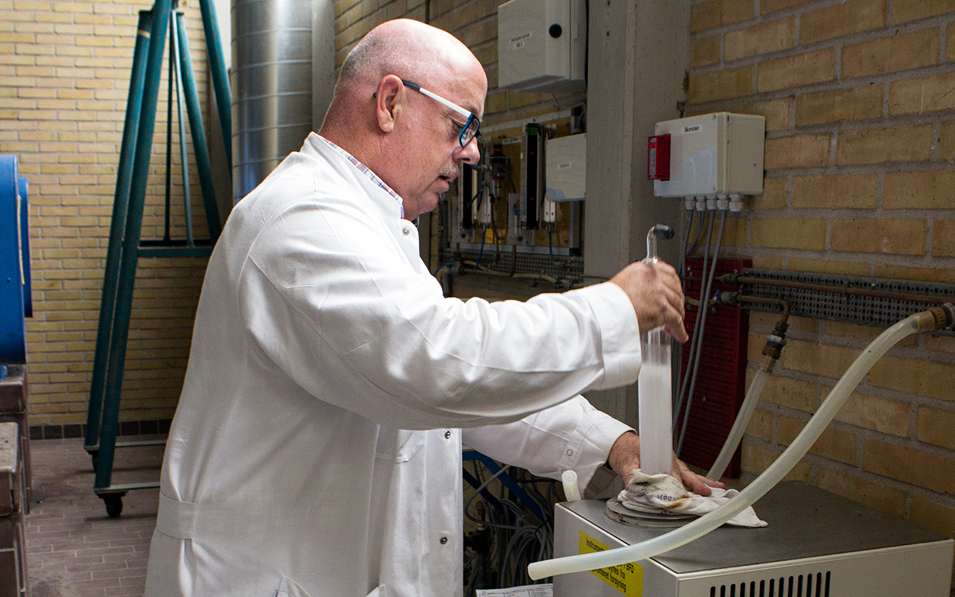
Med sig ud på runden har Jens en lang glaskolbe. Det er en frysefælde, som kan opfange radioaktiv forurening fra luften. Frysefælden opfanger luftfugtigheden med eventuelle stoffer, som måtte hænge fast i den. Jens trækker en frossen frysefælde op og sætter den nye i. Han skifter også luftfilteret, som den tørre ventilationsluft fra DR3-reaktoren bliver sendt igennem. Proceduren er omfattet af Betingelser for drift og afvikling. Hver dag bliver der taget aftørringsprøver og kontrolleret luftfiltre.
Inde i selve DR3-reaktoren kontrollerer Jens computerskærmen på en såkaldt iCAM, der måler støvet i luften. Forkortelsen står for Continuous Air Monitor, og instrumentet suger hele tiden luft igennem et filter. Målingerne er stabile og viser intet unormalt. Dagens arbejde med at fræse beton af reaktorens facade kan til gengæld ses på filteret. Undersiden er hvid, som da filteret blev sat i. Oversiden er mørkt gråbrun. Arbejdet har været beskidt, men der er ikke kommet uventet radioaktivitet på filtreret.
Filtrene måles
Jens gennemgår de forskellige instrumenter i reaktorhallen, men ingen viser udslag eller niveauer over det forventede baggrundsniveau. Så går han ind i laboratoriet og lægger aftørringsprøverne i skuffen til multitælleren med en pincet. Det tager omkring ti minutter at få resultatet ud af prøverne. Det tørre luftfilter fra ventilationen tager noget længere tid. 10.000 sekunder eller lidt under tre timer skal filteret ligge i en kasse af blysten, mens det bliver målt med et gammaspektrometer. Instrumentets følsomme måler eller detektor er af germanium, som bliver kølet ned med flydende kvælstof. Beholderen er tom, så Jens griber en handske og fylder på. Flydende kvælstof er minus 196 grader celcius og giver øjeblikkelige forfrysninger, hvis det kommer på huden.
Kontrol af værktøj og vasketøj
Mens prøver og luftfilter bliver sat over til måling, tør frysefælden langsomt op på bordet. Væsken skal hældes på en flaske, som bliver sendt hen til analyse hos DTU Nutech, som ligger i nabobygningen. DTU Nutech er Danmarks forskningscenter for radioaktive stoffer, og dem samarbejder DD med på flere områder. Jens går ud for at udføre de øvrige kontrolopgaver. Betonfræseren står på en palle i AH-hallen, og Jens stryger omhyggeligt hen over den med et håndholdt måleinstrument, en såkaldt plast-scintillationstæller, men han finder ikke spor af radioaktivitet. Så får fræseren en etiket med besked om, at den må forlade området. To grønne affaldssække og seks røde vasketøjssække bliver også kontrolleret og mærket ok.
Aftenen falder på, og det er tid til aftensmad. DD’s helseassistentvagt overnatter på området og overdrager vagten til afløseren næste morgen.