August 09 From Concrete to Radioactive Waste
40x40x200 cm baryte concrete, 40x40x200 cm radiation shielding, or 40x40x200 cm radioactive waste. Common to all these names is that they describe the same blocks but at different points in their lifespan.
F
It is also common that regardless of what one calls the approximately 800-kilogram heavy blocks, which are leaving the building piece by piece, which previously housed Denmark's largest research reactor, the conclusion is the same. For the next many thousands of years, the blocks will finally be laid to rest in a final repository, which must be completed by 2073 at the latest.
From 1960 – 2000, from research to Decommissioning
One of the major projects at Danish Decommissioning is the Decommissioning of Danish Reactor 3 (DR3). A project that commenced with the establishment of Danish Decommissioning in 2003 and which, throughout Danish Decommissioning's 20-year existence, has been a central part of the organisation's work.
DR3 was finally completed and commissioned on January 16, 1960, operating until the year 2000. The reactor design had been purchased in England, and as part of this design, concrete was used for shielding. For 40 years, this concrete served as shielding against the reactor's radioactive radiation, and for more than 40 years, this concrete remained untouched.
From 2000 – 2023, from shielding to radioactive waste
Following the shutdown of DR3 in 2000, a determination was required regarding the future of the former experimental facilities at Risø. This led to the establishment of Danish Decommissioning on September 15, 2003, and work has since been ongoing to decommission the six nuclear facilities at Risø.
It has become evident that the Decommissioning of DR3 is a more complex process than the decommissioning of Risø's two other reactors, DR1 and DR2. The reasons for this are numerous, including that DR3 has a different design and is significantly larger than the other two, both in terms of power output and consequently radiation levels, as well as its physical dimensions.
The fact remains, however, that DR3 is undergoing decommissioning, and as part of this process, blocks of the aforementioned concrete are cut into precisely measured pieces. These pieces are subsequently to be placed in a steel container, which necessitates them being of the correct size. This is a time-consuming process, complicated by several factors.
Within the concrete, there may be pockets of aggregate concrete, and rebar has been used for reinforcement, which is extremely demanding on the blades employed for this purpose. This means that on some days, saw blades must be changed frequently, up to 4 times daily.
All cutting is performed within a sealed enclosure using a remote-controlled saw to minimize dust within the building; however, this also means that blade replacement is time-consuming.
The aforementioned enclosures are connected to large vacuum cleaners, whose filters also require regular replacement, a procedure that can only occur when the saws are stationary.
But let us return to the concrete blocks.
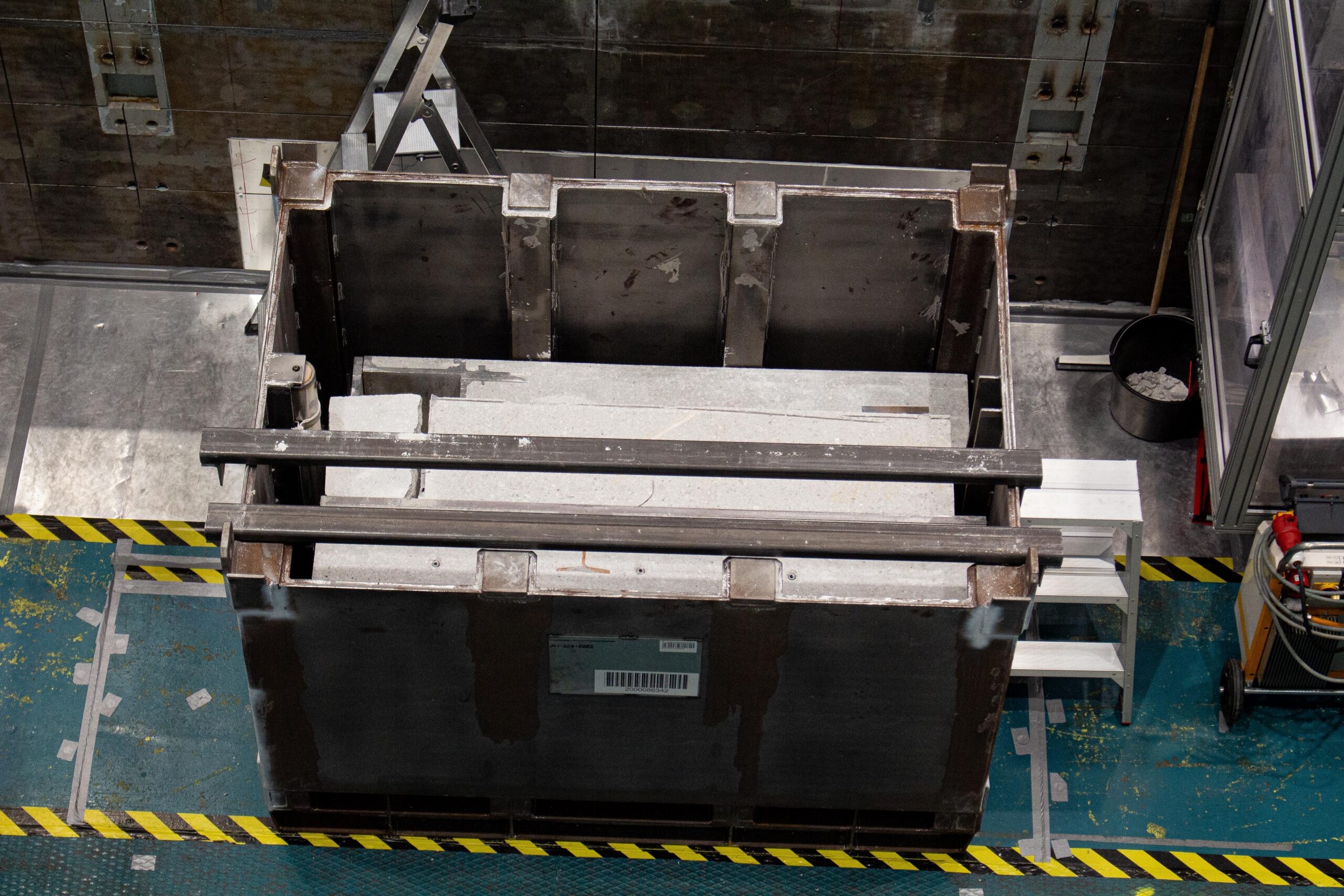
Once the concrete blocks have been finally cut to size, they are ready to leave the enclosures and proceed to the steel container where they will reside for the next thousand years or more.
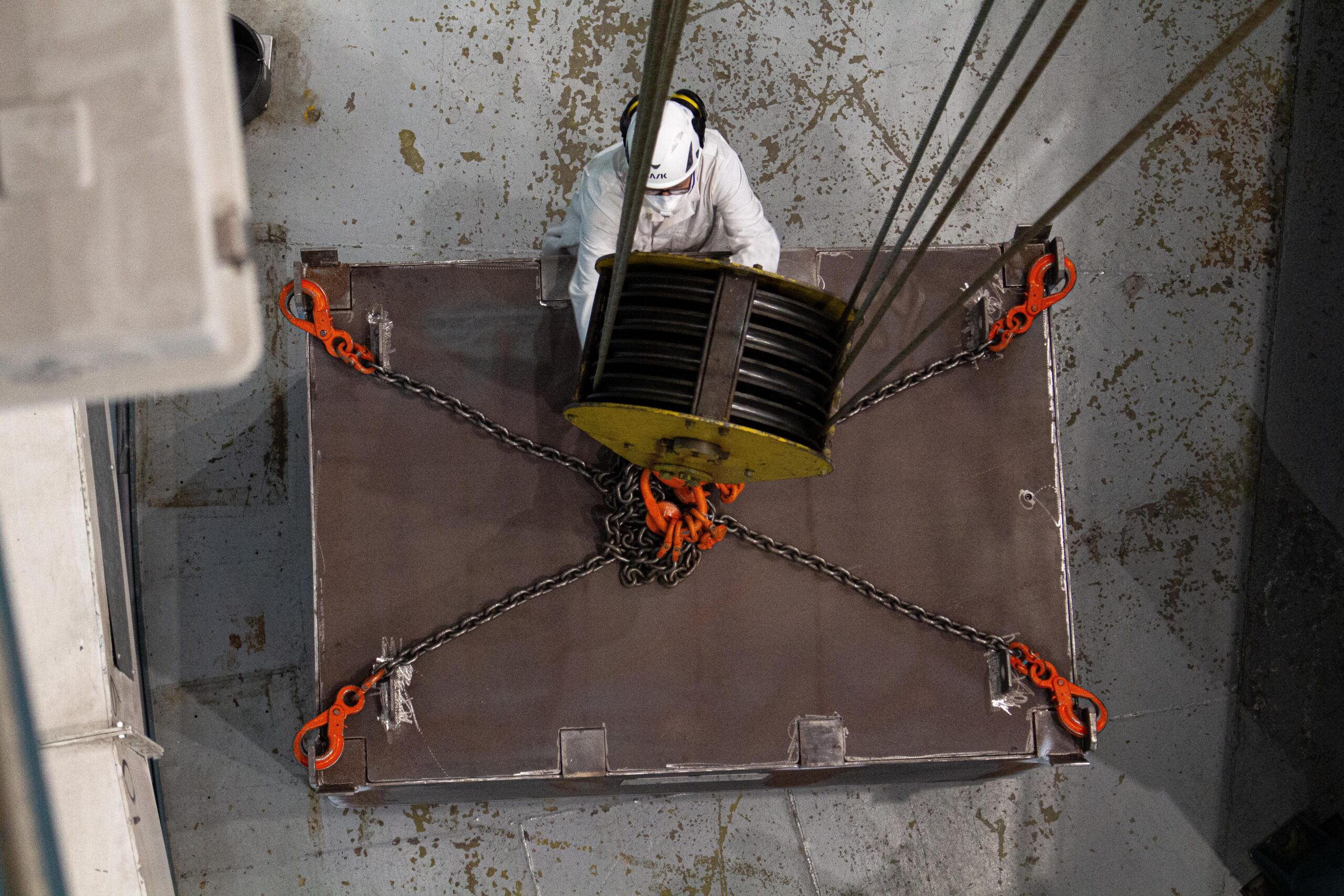
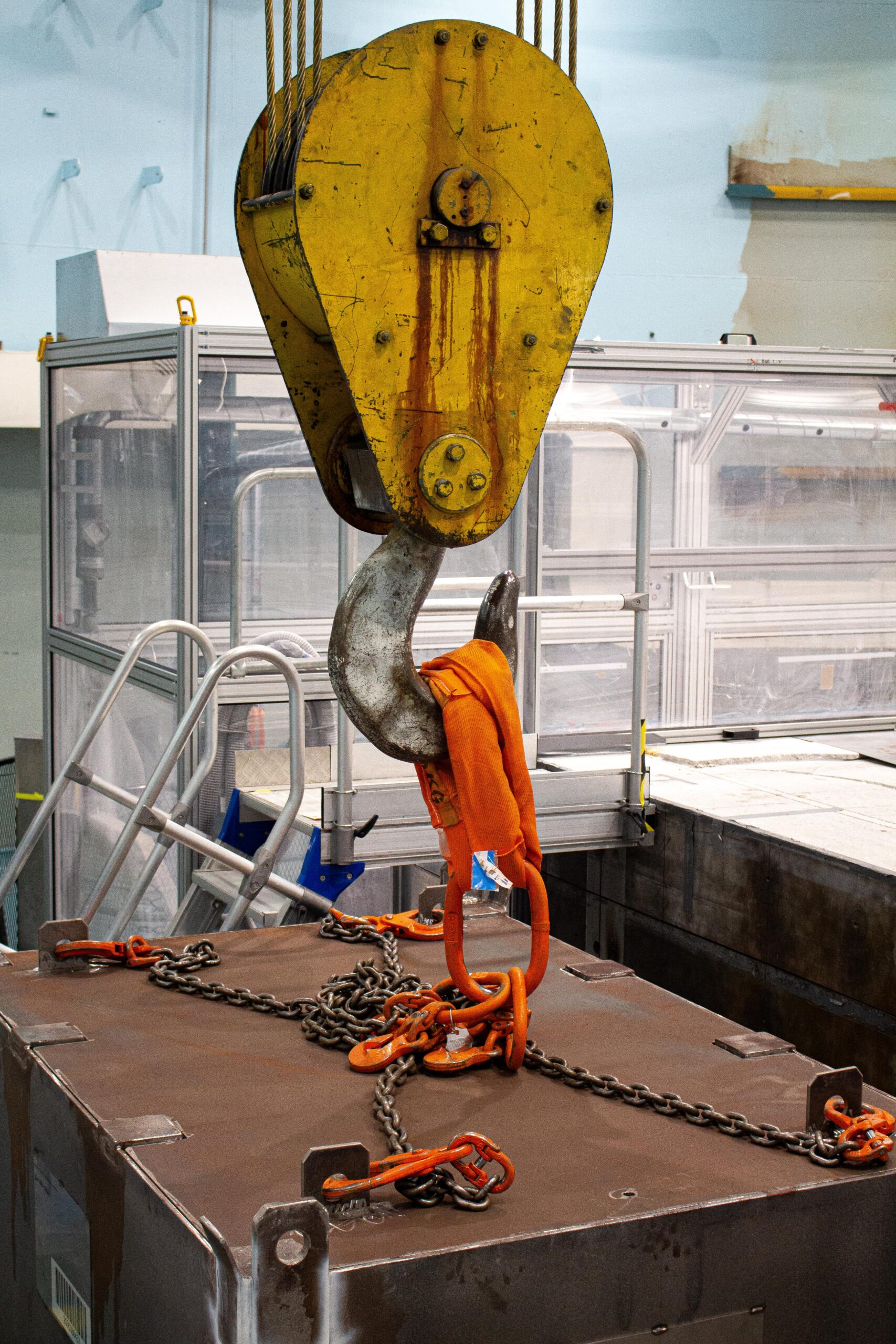
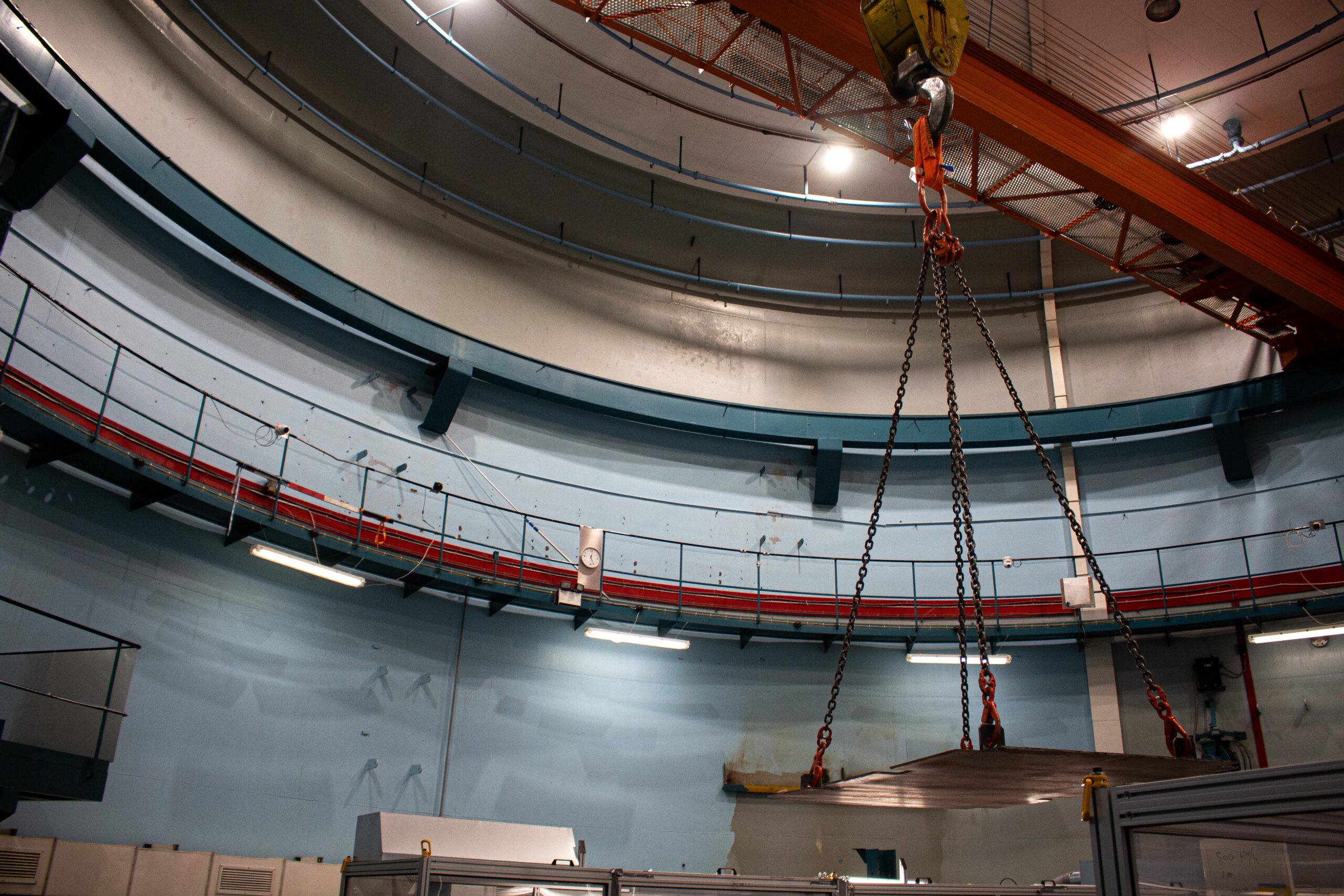
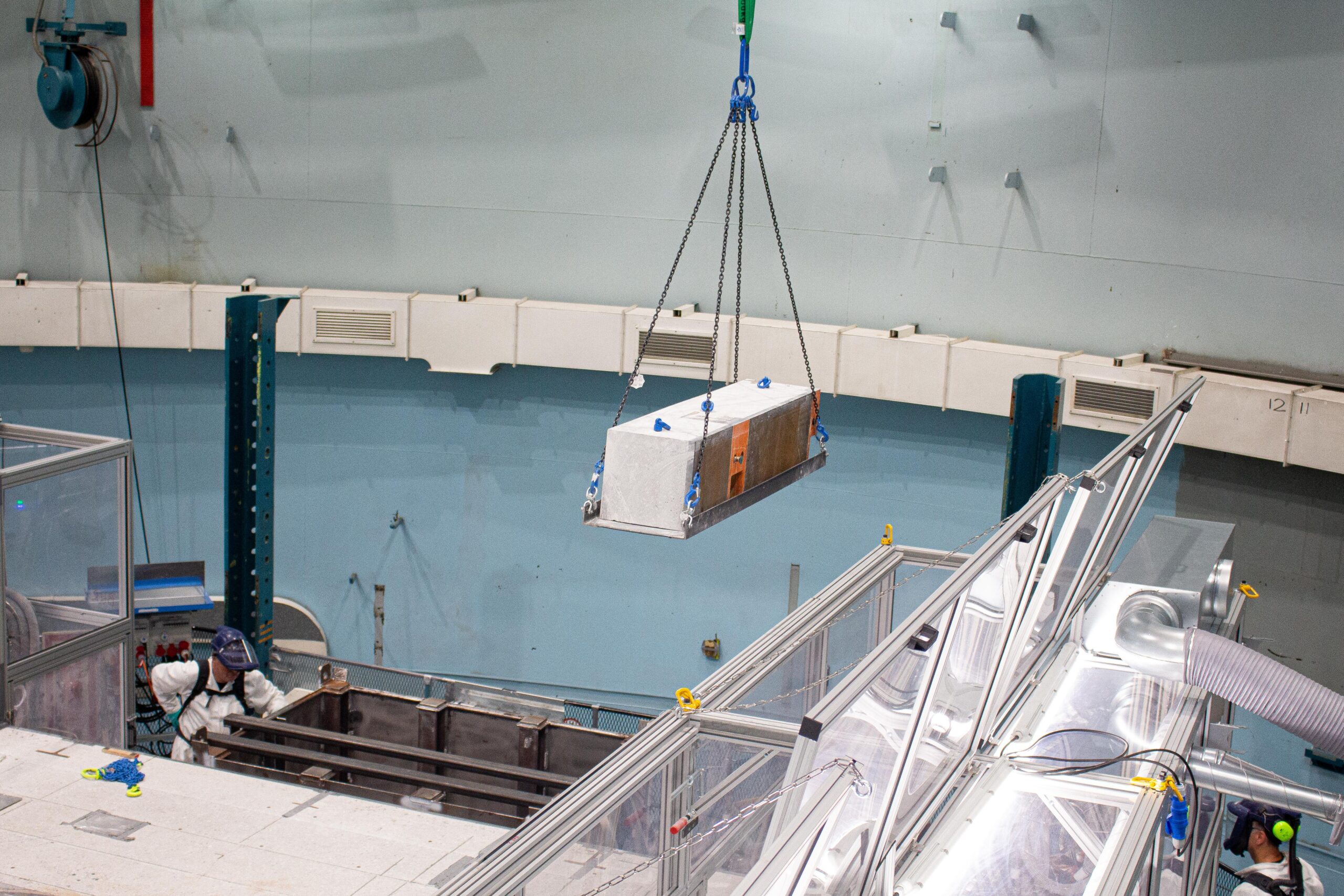
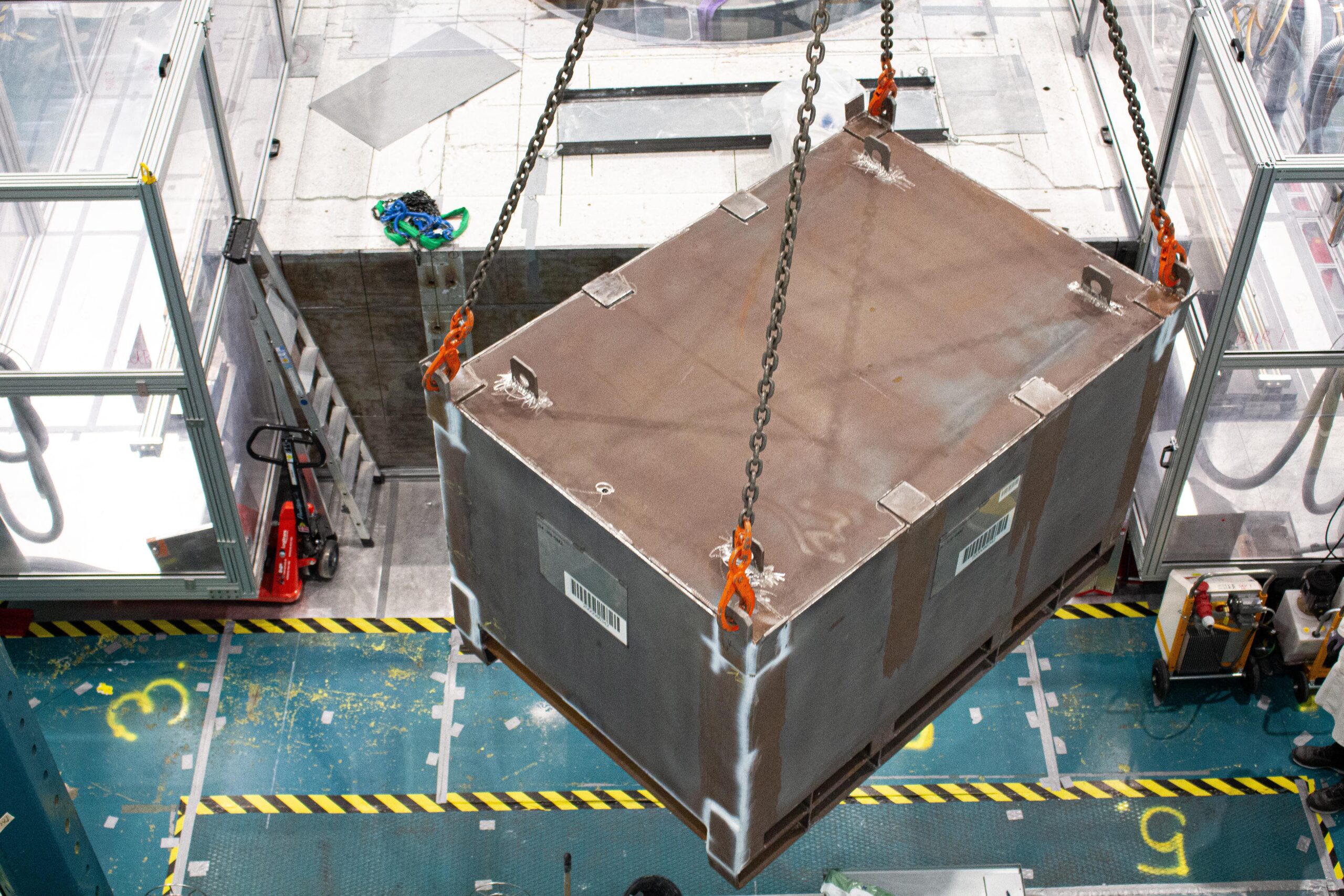
However, the blocks are so heavy that they cannot simply be lifted manually, thus requiring the use of the crane installed as part of DR3. This is a cumbersome lifting operation, which involves drilling lifting eyes into the blocks to allow a tray to be positioned underneath. Once the tray is in place and the block has been lowered onto it, the tray, with the block, is then lifted and transported to the steel container. Here, the tray is removed, and the concrete is lowered into the steel container, which is then packed until completely full, meaning when 9 blocks are inside the container.
It is also at this point that the now 63-year-old concrete ceases to be shielding and becomes, and will forever remain, radioactive waste.
2023 – ? A Journey Concludes
Once the blocks are neatly stacked in the steel container and the lid is secured, the container will be transported from DR3 to the interim storage facility, located approximately in the center of Risø.
Before they can commence their journey, the radiation level of the waste must be measured. Although the waste will ultimately be transferred to a final repository and will reside in interim storage in the meantime, it is still essential to ascertain the external radiation levels of the container.
This is significant for determining the container's placement within the interim storage facility, considering the radiation levels outside the storage facility and serving as a future reference when the container is to be relocated.
Concurrently, the container will be affixed with a barcode and registered in the waste database, ensuring that information about its contents can always be retrieved. This procedure is applied to all radioactive waste managed by Danish Decommissioning.
A single container filled with concrete blocks weighs over 9 tons, thus its transportation requires appropriate equipment such as cranes and transport trolleys, as well as significant collaboration and skilled personnel.
Once the container is placed in the interim storage facility, it will remain there until it is relocated to the new upgraded storage facility (NOL), before ultimately ending its days in a final repository, scheduled to be operational by 2073 at the latest.