


19 Mar Advanced measurement saves society from radioactive waste
Danish Decommissioning sorts more waste than most. By 2025, Danish Decommissioning will have released 33 tonnes of material for conventional waste management, while 1.3 tonnes have been classified as radioactive waste and stored at Risø. This sorting represents a significant contribution to limiting the quantities of waste that will ultimately require disposal in a final repository.
One of Danish Decommissioning's central tasks is to ensure that the final quantity of radioactive waste Denmark must dispose of underground is as minimal as possible. Therefore, employees at DD's release laboratory at Risø work purposefully to distinguish between material that genuinely constitutes radioactive waste and material that does not.
Advanced Measurements Ensure Correct Classification
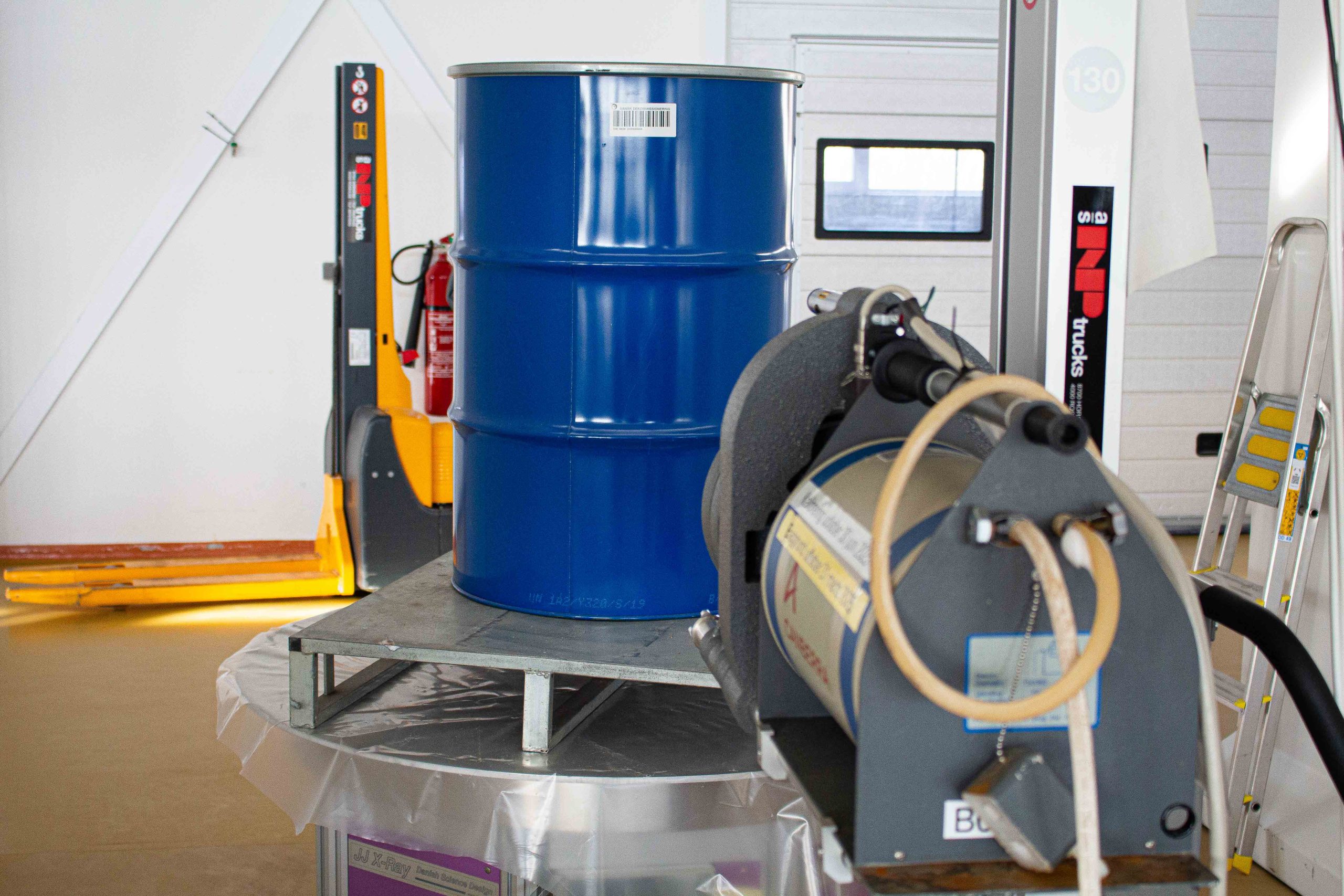
In the release laboratory, all material expected to be below the threshold values for radioactive waste is thoroughly inspected. Advanced measuring equipment capable of detecting even very low levels of radiation is used here. Only if no radioactivity above the threshold values can be measured is the material released for conventional waste management.
The release function is the only accredited one of its kind in Denmark.
In 2025, the measurements resulted in 33.1 tonnes of material being released as conventional waste, while 1.3 tonnes were classified as radioactive waste and stored at Risø. This represents the largest quantity of released waste in the past five years. In 2021, 3.7 tonnes were released; in 2022, 28.5 tonnes; in 2023, 9.3 tonnes; and in 2024, 3 tonnes.
In total, since 2021, 77.7 tonnes of waste have been released for conventional management, while 5.4 tonnes have been classified as radioactive waste.
The material typically released includes, among other things, reactor components, concrete, steel structures, ventilation systems, water pipes, machine parts, and other building components from the former nuclear research station at Risø.
There is also waste that does not pass through the release laboratory, as less advanced measuring equipment can pre-determine its radioactivity. This is sent directly to storage facility.
Significant Savings for Society
It has not yet been determined how Denmark's future final repository for radioactive waste will be constructed or what it will cost. However, it is clear that depositing radioactive waste in a final repository is significantly more expensive than sending material for conventional waste disposal.
Therefore, every single kilogram that can be sorted out as non-radioactive has a direct positive effect – both on the environment and on the long-term costs for the state, and consequently for taxpayers.
Mikkel Øberg, Director of Radiation Protection, work environment, and Quality at Danish Decommissioning, is pleased with this year's results:
“It is a truly excellent result that we can once again release such significant quantities of material. This is concrete proof that our expertise and our measurement processes function precisely as intended. Each time we can document that a material does not exceed the threshold values, we save resources, space in the final repository, and money for society. This is absolutely central to our mission.”
Facts
Released Waste
- Material that, after measurement, does not contain radioactivity above the threshold values
- Can be managed as conventional waste
- Does not burden the final repository and is more cost-effective for society
Radioactive Waste
- Material that contains measurable radioactivity above the threshold values
- Sent directly to storage facility at Risø
- Must eventually be deposited in a final repository
The Release Laboratory
- Denmark's only accredited laboratory for material release
- Performs precise radiation measurements to correctly classify waste
- Ensures that only essential materials are designated as radioactive waste