


09 Apr Area Monitoring – A Central Part of Responsible Management of Denmark's Radioactive Waste
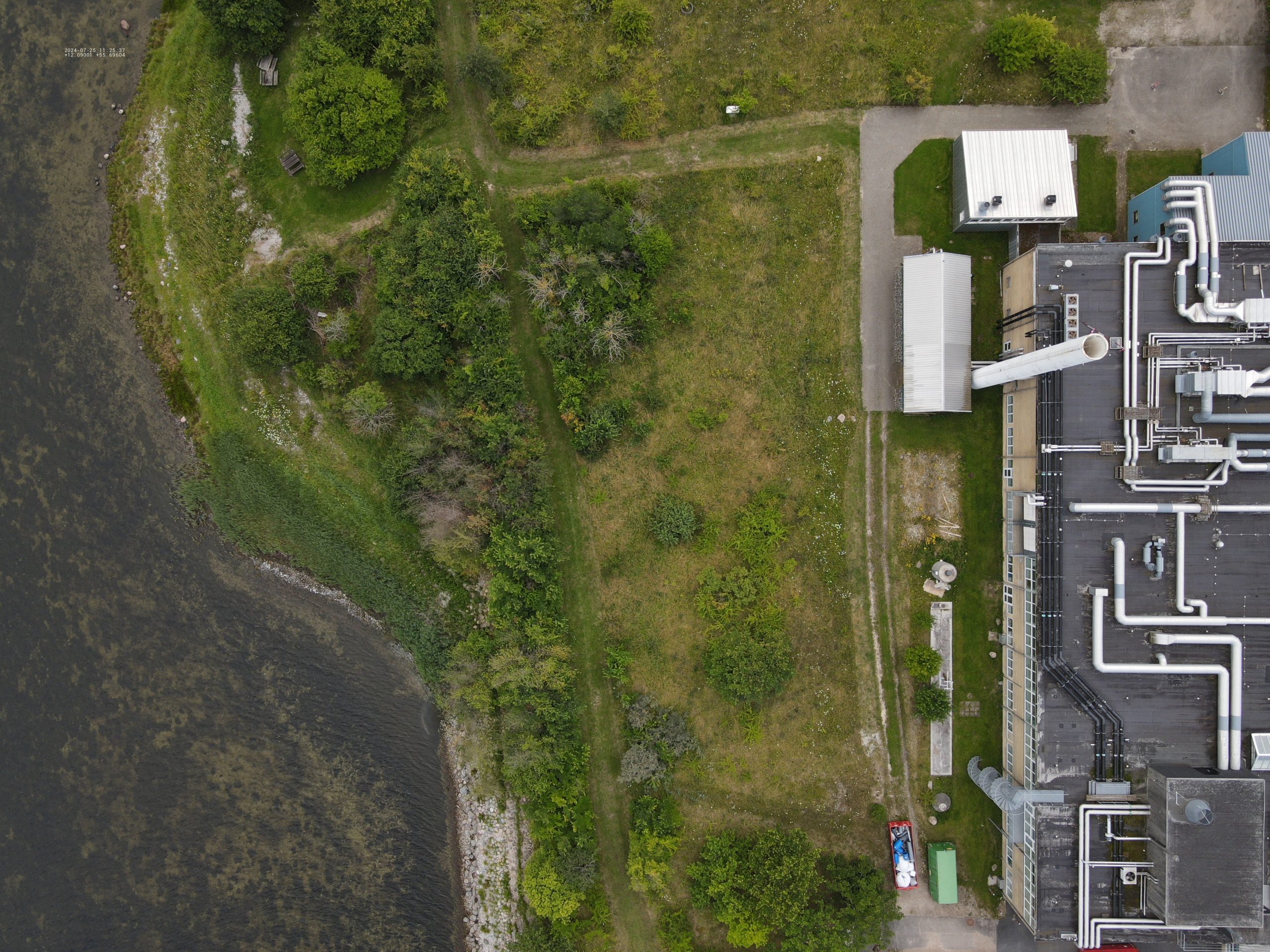
Since operations commenced in 1957, when the first of the three reactors at Risø was started, monitoring of the area on and around the peninsula has been in place.
Since 2003, when Danish Decommissioning (DD) was established, the comprehensive area monitoring program has been DD's responsibility, and DD ensures that the program is implemented in accordance with the guidelines from the nuclear regulatory authorities.
The area monitoring ensures close surveillance of DD's potential discharge of radioactive substances.
Thus, the monitoring helps to ensure that DD's activities do not negatively impact the environment. Fundamentally, the program consists of two main parts: monitoring within the fence and monitoring outside the fence.
Within the Fence: Safety for Employees and Partners
Within the fenced area, DD focuses on protecting its own employees as well as the immediate neighbours on the Risø site, namely the employees at DTU and Aarhus University.
Very clear regulations apply to radiation levels at the nuclear facilities, the storage facilities, and related facilities on the peninsula. These regulations are set by the nuclear regulatory authorities (The Danish Health Authority and The Danish Emergency Management Agency), who also conduct supervision and ongoing control of DD.
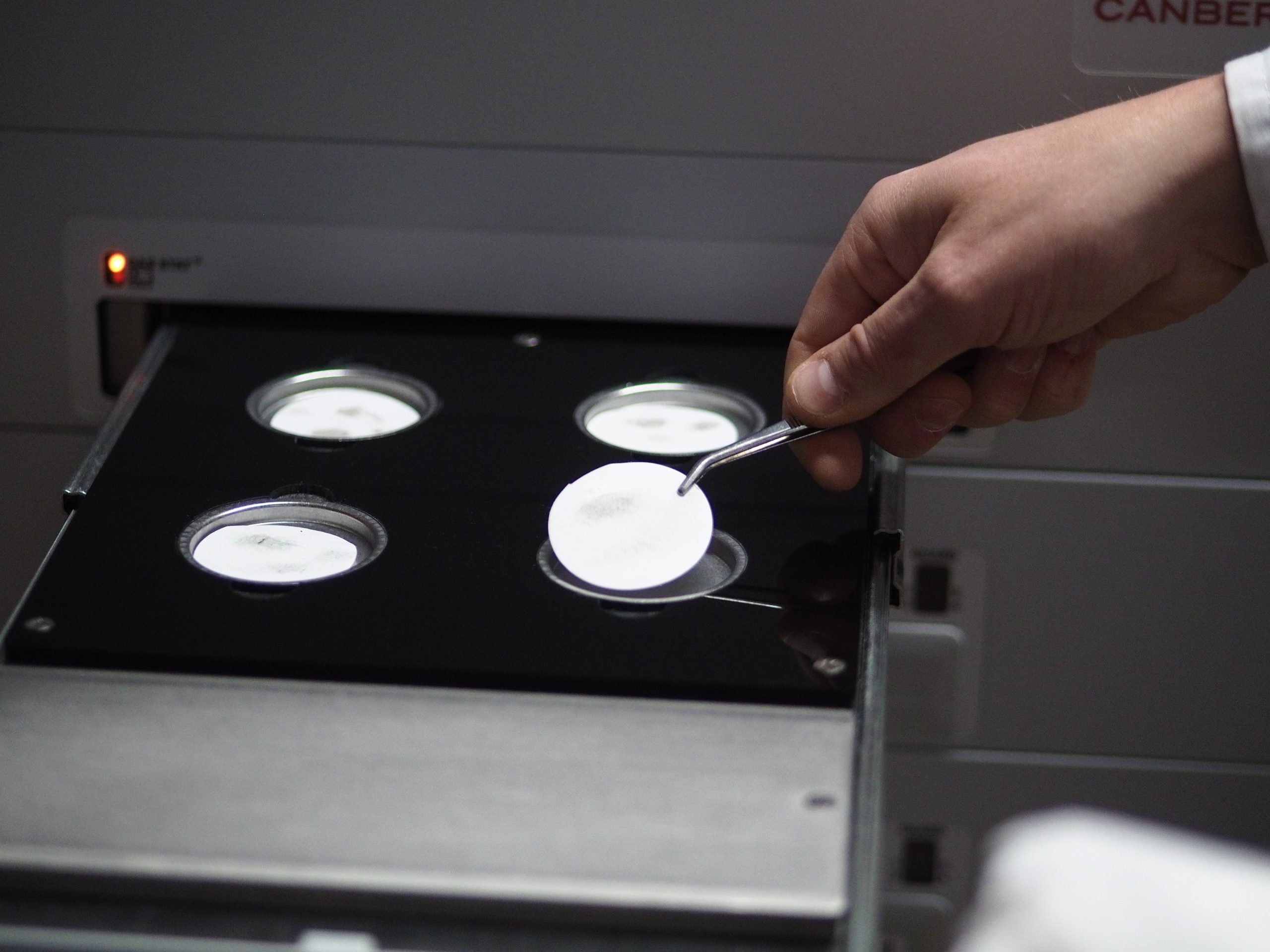
DD also continuously conducts its own measurements of radiation levels both inside and around the facilities. These measurements include passive monitoring using various measuring devices, as well as ongoing contamination measurements using wipe samples, which are systematically analyzed and documented.
Furthermore, DD implements radiation protection in all activities, ensuring that planning and ongoing monitoring during these activities prevent unintended releases.
Outside the Fence: Environmental Monitoring in the Vicinity
Regulations also apply to the environmental monitoring that DD must conduct outside the fenced area.
In collaboration with DTU, which is the provider of the area monitoring, DD continuously conducts measurements of air, sediment, rain, grass, water, and soil. More than 160 samples are collected annually outside the fenced area.
After sample collection, DTU's radiochemical laboratory is responsible for the analysis of the collected samples, examining for substances such as tritium in rain, lead in seawater, beryllium in air, potassium in grass, iodine in sewage water, and cesium in seabed sediments.
Finally, the analyses conducted are compiled into a report, which is published on www.dekom.dk/publikationer.
How DD works with radiation protection
The Radiation Protection, Work Environment, and Quality (SAK) unit is responsible for ensuring radiation protection in relation to DD's operations. The department employs both health assistants and health physicists, all of whom work on various radiation protection tasks.
Health physicists primarily focus on the planning and computational aspects of radiation protection, and they also conduct internal training in radiation protection.
Health assistants perform ongoing monitoring of the facilities and sample collection, as well as ensuring dose monitoring for DD's employees.
The department also includes laboratories for analyzing collected samples, and DD is able to conduct radiological measurements of the waste generated during the decommissioning of the facilities.
At DD, employees are categorized into two radiation-related groups: radiation-exposed employees and non-radiation-exposed employees. These categories are also used in other professions, for example, in hospitals.
Radiation-exposed employees are those who perform tasks at the nuclear facilities and can therefore be expected to receive (low) radiation doses.
Radiation-exposed employees wear passive dosimeters (right image), which are submitted monthly to The Danish Health Authority, where doses are registered and recorded. Additionally, they wear digital dosimeters (left image) during activities or stays at the facilities.
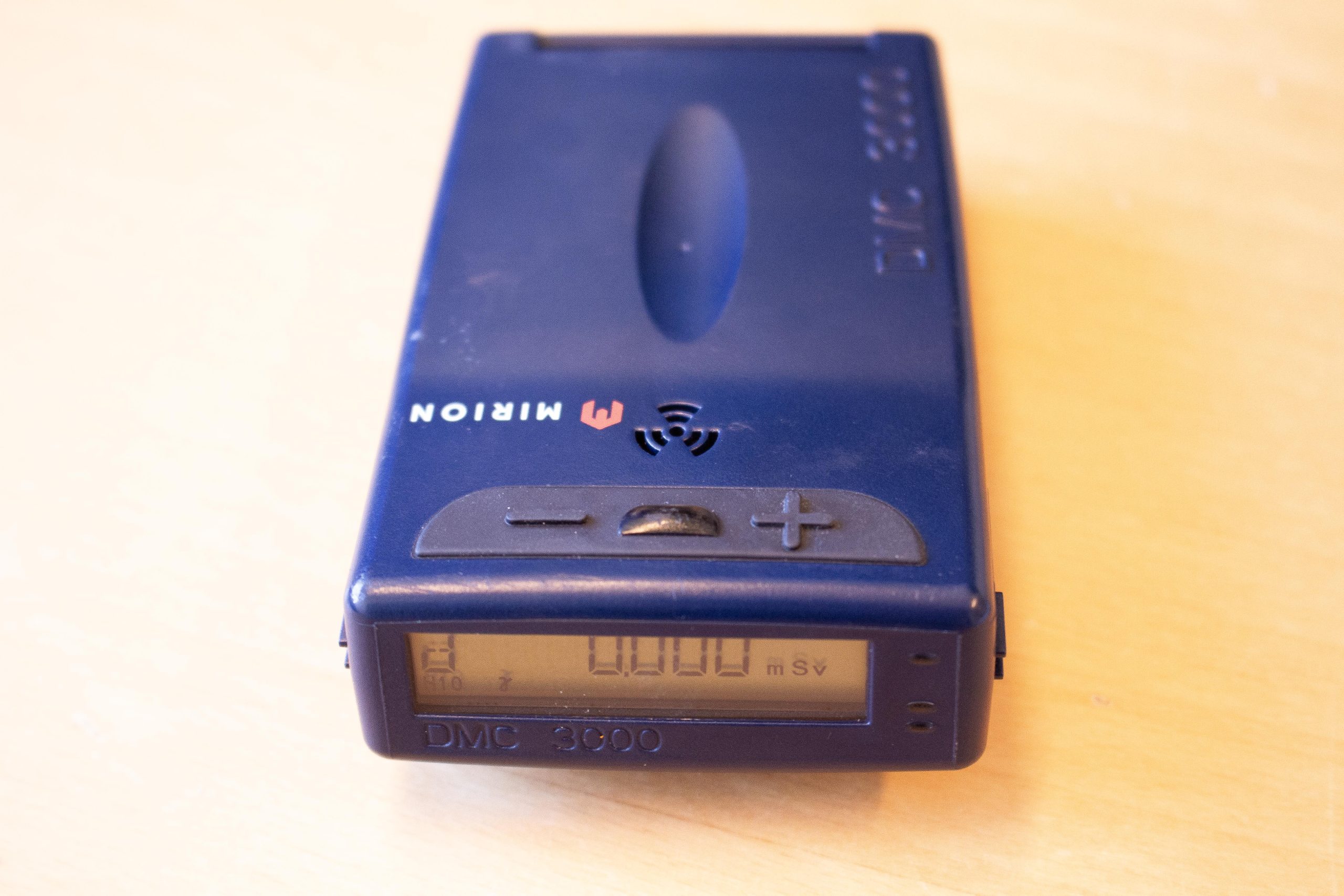
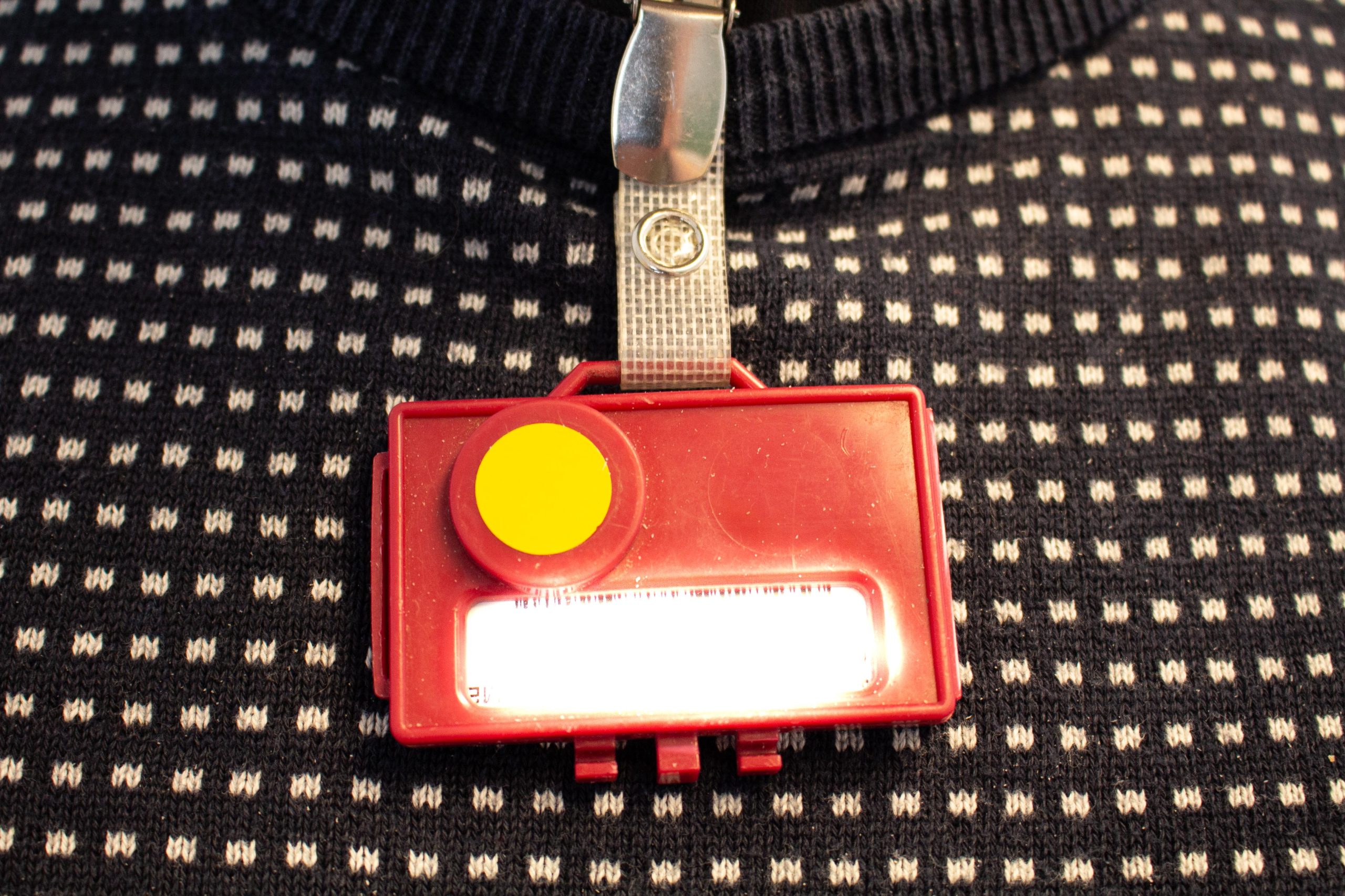
The latest figures from 2024 show that individuals working with decommissioning (in 2024, exclusively at Danish Decommissioning) received an average dose of 0.02 mSv per person. In comparison, one receives 0.05 mSv on a flight to New York¹².
Non-radiation-exposed employees are, for example, office staff. They do not continuously wear passive dosimeters but naturally have access to personal digital dosimeters that must be worn during any stays at the facilities. Should non-radiation-exposed employees receive a dose, it is also recorded.
A final personnel category comprises DD's external collaborators. These include, for example, craftspeople who require access to the facilities. They are fundamentally subject to the same monitoring as DD's own radiation-exposed employees and must also wear passive and digital dosimeters, as well as any other necessary safety equipment.
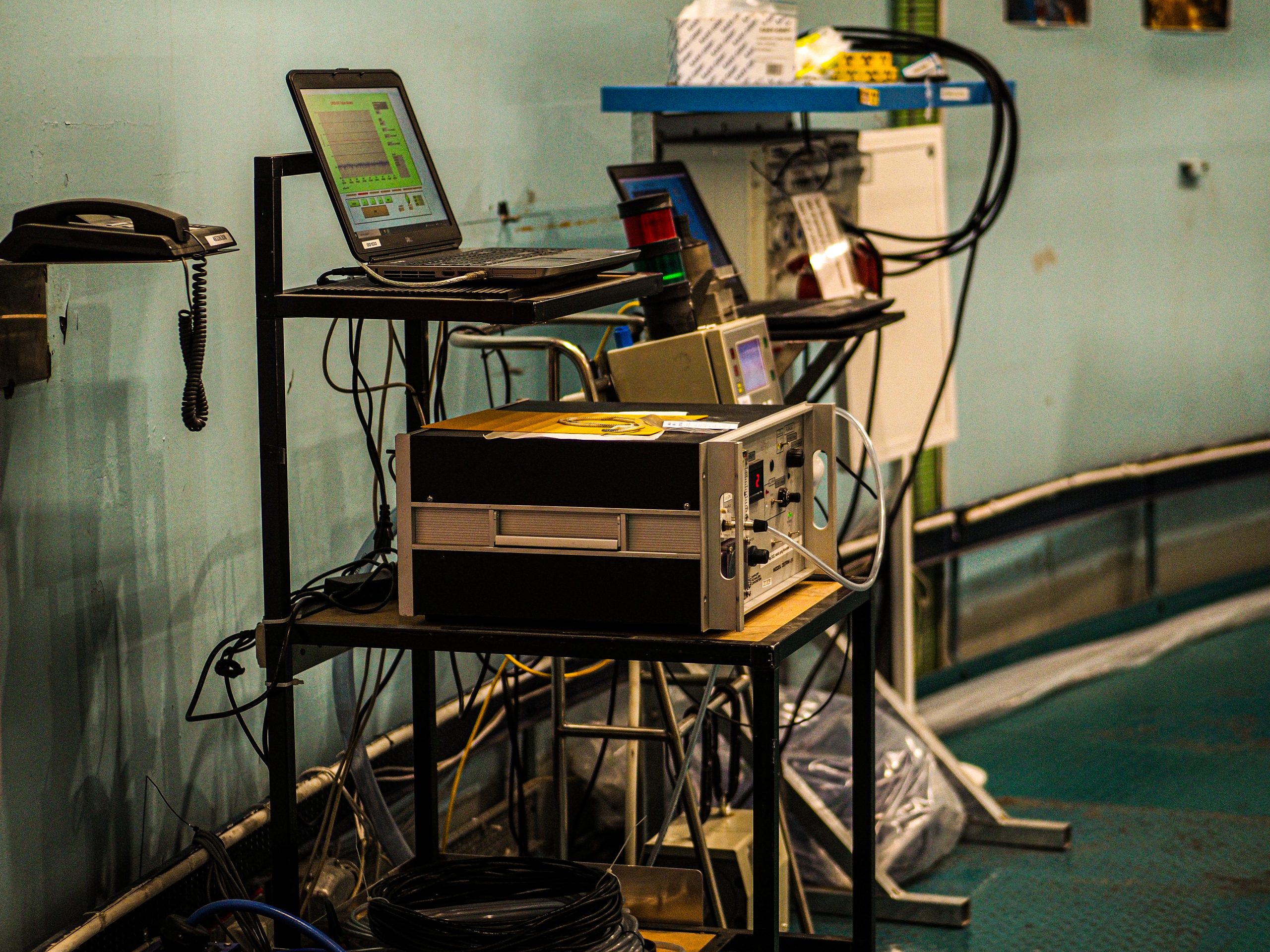
Various radiation level monitoring systems are installed at the nuclear facilities, depending on the specific facility. A central monitoring method involves continuous air monitoring, using so-called iCAMs, which monitor airborne radioactive particles (right image below).
Ongoing contamination monitoring is conducted within and around the facilities using swipe samples. These samples are analyzed shortly after collection to quickly determine if contamination is present in an area (left image below).
Documentation and Transparency
All measurements and analyses are compiled into various reports, which are published on www.dekom.dk/publikationer.
Additionally, annual reports are published by The Danish Health Authority, providing an overview of doses associated with occupational radiation exposure. These reports include a category specifically addressing decommissioning.
These reports are publicly available and contribute to transparency regarding DD's activities.
Fact: what is radioactive contamination?
Contamination occurs when an otherwise clean item becomes soiled. This typically refers to an item that is not inherently radioactive waste but has acquired radioactive material, causing its radiation level to exceed a threshold.
By decontaminating the item, which can be done with something as simple as water or wiping, the radioactive contamination can be removed, ensuring the item is once again below the threshold values.
An example of this could be a concrete floor with radioactive dust. The dust can be removed by vacuuming, thereby eliminating the elevated radioactivity and making the floor radiologically clean again. The removed contamination is then treated as radioactive waste.