


16 May Transparency and knowledge about nuclear waste
DD opens its doors to the media in response to a request for greater insight into the topic, which follows the publication of preliminary studies for a final repository for radioactive waste.
OOn May 4th, SIS, GEUS, and DD submitted the results of the preliminary studies to the inter-ministerial working group leading the establishment of a Danish final repository for radioactive waste. Following a briefing for representatives from the parliamentary parties, the preliminary studies were published, notably identifying 22 areas and recommending 6 as particularly suitable for the repository's location.
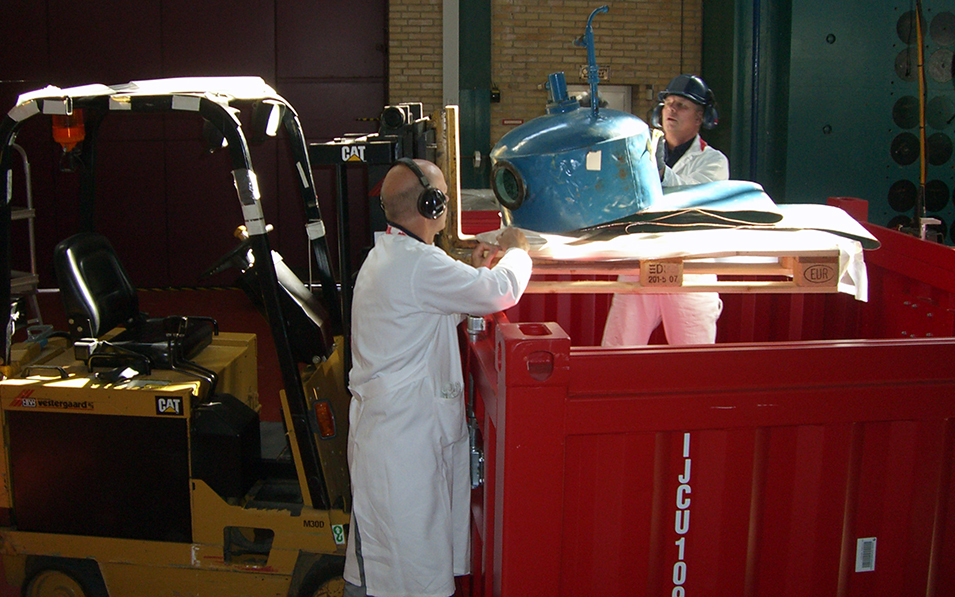
In order to address the many issues raised by the publication, a press briefing was held on Thursday 5 May DD , where the media present were given the opportunity to ask in-depth questions to the contributors of the studies and to look for themselves at waste containers and storage facilitys, as well as some of the waste to be deposited. In the days following, several media outlets visited to film and photograph the waste and interview, not least GEUS and DD .
It has been important for DD to demonstrate transparency and invite the media, enabling citizens to gain a clearer understanding of the subject matter and have fundamental questions about the preliminary studies answered. The preliminary studies are technically complex and often inaccessible, and most people naturally have an unclear perception of the composition of Danish radioactive waste.
For the most part, the radioactive waste consists of metal scrap, concrete, plastic, and gloves, containing only low levels of radioactivity. It is easier for most people to comprehend when the media are allowed close access to film the waste and interview an employee who can explain and demonstrate that the vast majority of the waste is handled manually.