


19 May Risø's Fuel Production Facility Undergoing Decontamination
DD has achieved substantial progress in the decontamination and release of the facility where Risø manufactured fuel for the research reactors. We invite you to explore the building and learn about the intricate process of removing radioactive contamination from its floors, walls, and drainage systems.
WWhen Risø Research Centre was in operation, part of its task was to manufacture its own fuel rods for the research reactors. This took place in the so-called Fuel fabrication plant, where uranium powder was pressed and rolled into fuel rods. Over the winter, Danish Decommissioning has removed or released a significant portion of the production facility in the Fuel fabrication plant, and walls and floors have been cleaned. Among other things, we have removed a two-meter-wide melting furnace, which was part of the early fuel production (up to the mid-1980s). The melting furnace is contaminated with uranium and has therefore been dismantled and separately packaged for disposal or melting.
The Powder Room
The initial phase of fuel production took place in the so-called powder room. Here, Risø's laboratory technicians measured out uranium in powder form and pressed it into solid pellets encased in aluminum. The powder was valuable and meticulously controlled, but it was inevitable that uranium would become airborne or be lost in small quantities. Consequently, the powder room and its associated ventilation system will present a greater challenge for radioactive decontamination. This process will occur under a plastic tent to contain any dust containing radioactivity. The ventilation above the powder room has been completely disconnected, and the pipes have no connection to other ventilation systems in the building.
The Rolling Mill
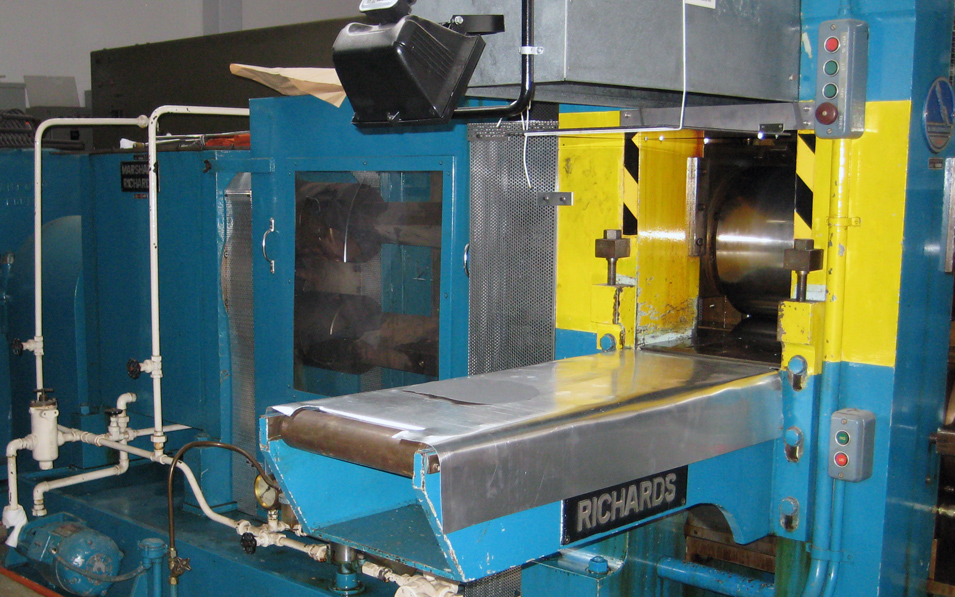
Once the uranium was pressed into pellets encased in aluminum, these were rolled into thin plates measuring approximately 70 x 10 cm. The rolling mill in the Fuel fabrication plant has undergone control measurements, and the flooring within half a meter of the mill has been removed. No airborne uranium was detected around the mill, making this a somewhat simpler task than the powder room will be. The rolling mill and the hall it occupies have been released, thus completing this part of Danish Decommissioning's task.
The Cleaning Room
After the uranium plates were rolled, they were cleaned and degreased, primarily with acid, in the so-called cleaning room. Here, we removed the cleaning tanks and abraded the walls in a horizontal band 70 cm high, corresponding to the height of the tanks. The flooring has been removed, and along with the plaster abraded from the walls, it has been managed as radioactive waste. Our work in the cleaning room is complete, and the room has been released. This release occurs each time we complete a sub-task in a decommissioning project: All rooms and facilities are meticulously measured for radiation as they are cleaned. There are precise requirements for the maximum residual radioactivity permissible when a building or building component is released. The release measurements themselves are a rather lengthy procedure, as the measurement time for low levels of unirradiated uranium is extended.
Overall, the dismantling and decontamination of the Fuel fabrication plant are progressing well and according to schedule. The final part of the task involves cleaning and measuring the so-called powder room for release, as well as its associated ventilation and drainage systems, which are somewhat difficult to access. By the end of the year, we expect to conclude the work on the Fuel fabrication plant. Subsequently, a final report must be prepared and approved by the nuclear regulatory authorities before DD can transfer the rooms for alternative use without restrictions.